
How to Choose the Right Door Hardware for Your Home
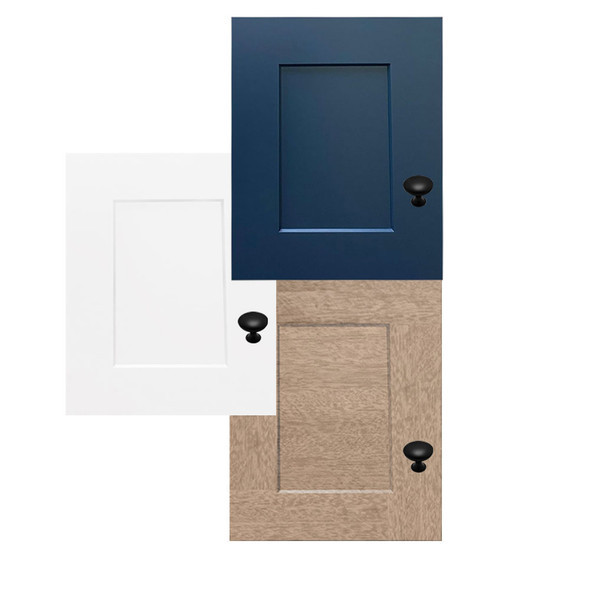
Door hardware comes down to four decisions: function, style, finish, and measurements. Get function wrong and the hardware does not work for the door. Get measurements wrong and it does not fit. Start here.
Step 1: Choose the Right Function
Passage: no lock, latch operates freely from both sides. Hallways, interior doors, closets.
Privacy: push button on interior locks the outside lever. Emergency pin release on exterior. Bathrooms and bedrooms only. Never on exterior doors.
Keyed entry: key cylinder on exterior, thumb-turn on interior. All exterior doors paired with a deadbolt. Interior rooms needing key access.
Dummy: fixed handle, no mechanical function, surface mounted. Closets with a catch closure or fixed panel of French doors.
Count every door and list the function needed before buying anything.
Step 2: Knobs or Levers
Door levers open with a downward push. No grip rotation. Can be operated with an elbow or closed fist. ADA compliant. Right choice for most modern and transitional homes and households where ease of use matters.
Door knobs require gripping and rotating. Suit traditional, colonial, craftsman, and Victorian homes. Better where childproofing or pet security matters since the twisting motion is harder for toddlers and animals to operate.
Step 3: Match Style to Home Type
Modern and contemporary: straight lever profiles, minimal rosettes, no decorative detailing.
Traditional and colonial: round knobs or curved levers, decorative rosettes, beveled trim plates.
Farmhouse and craftsman: knobs or levers with slight texture in oil rubbed bronze or matte black.
Transitional: lever with a gentle curve or clean round knob without heavy ornamentation.
Step 4: Choose the Right Finish
Match hardware finish to the metals already in the room. Start with the faucet and pendant lights. One finish consistent across all interior door hardware throughout the home.
Modern and minimalist: matte black, graphite, brushed nickel
Transitional: satin brass, satin nickel, matte black
Traditional: oil rubbed bronze, antique brass, satin nickel
Farmhouse: matte black, oil rubbed bronze, antique brass
Hinges, strike plates, and door stops should match the knob or lever finish. Visible hinges in a different finish from the lever draw attention for the wrong reason.
Step 5: Technical Measurements
Backset: distance from door edge to center of bore hole.
Interior doors: 2-3/8 inch. Exterior doors: 2-3/4 inch. Measure existing backset before ordering replacement hardware.
Bore hole: standard diameter is 2-1/8 inch. Older homes may have 1-1/2 inch requiring an adapter.
Door thickness: interior doors are typically 1-3/8 inch. Exterior doors typically 1-3/4 inch. Confirm against lockset specification before purchasing.
Door Handing for Levers
Levers are handed and must be ordered for the correct hand. Stand on the push side of the door. Hinges on the left means left-hand. Hinges on the right means right-hand. Knobs are not handed and fit any door.
Room by Room Guide
Front entry: keyed entry with deadbolt, lever or handleset
Back or side entry: keyed entry with deadbolt, same finish as front
Bathroom: privacy, lever or knob
Bedroom: privacy, lever or knob
Hallways: passage lever
Closets: passage or dummy depending on whether a latch is needed
Home office needing key access: keyed entry
French door active panel: passage, privacy, or keyed entry
French door fixed panel: double dummy
Common Mistakes
Choosing finish before checking existing room metals. Identify faucet and lighting finish first.
Ordering levers without checking door handing. Wrong hand lever points the wrong direction.
Not measuring backset before ordering. Wrong backset means the latch will not align with the strike plate.
Buying from multiple brands in the same finish. Satin nickel tone varies between manufacturers. One collection keeps finish consistent.
Frequently Asked Questions
How do I choose door hardware for my home?
Start with function: passage, privacy, keyed entry, or dummy for each door. Then knob or lever, then finish, then confirm backset and bore hole measurements.
What is the most popular door hardware finish?
Matte black and satin nickel lead the US market. Brushed brass is growing in transitional and traditional homes. Oil rubbed bronze holds in farmhouse and traditional styles.
Should all door hardware in a home match?
Yes for finish. One finish throughout creates visual cohesion. Style can vary slightly between zones.
What is door handing?
Levers are designed for either left-hand or right-hand doors. Stand on the push side. Hinges on the left means left-hand. Hinges on the right means right-hand. Order accordingly.
What backset do I need?
Interior doors: 2-3/8 inch. Exterior doors: 2-3/4 inch. Measure from door edge to center of bore hole before ordering.
Can levers work in a traditional home?
Yes. Choose a lever with a curved profile and decorative rosette rather than a straight bar lever. The curve suits traditional architecture while keeping the ergonomic advantage.
At Inside Out Hardware we carry door knobs and door levers from Designers Impressions in matte black, satin nickel, oil rubbed bronze, and polished chrome. Free shipping on orders over $50 across the USA.
LATEST NEWS
How to Change a Door Knob: Complete Step by Step Guide
How to Change a Door Knob Changing a door knob is a 10-minute DIY project. You need a Phillips head...
Satin Nickel vs Brushed Nickel: What Is the Difference
Satin Nickel vs Brushed Nickel: What Is the Difference Brushed nickel has visible directional lines...
Best Hardware for White Cabinets: Finishes and Style Guide
Best Hardware for White Cabinets Matte black gives the boldest contrast on white cabinets. Brushed b...

Black Kitchen Hardware: Matte Black Pulls and Knobs Guide
Black Kitchen Hardware Matte black is the most popular kitchen hardware finish in the US market. It...

How to Choose the Right Door Hardware for Your Home
Door hardware comes down to four decisions: function, style, finish, and measurements. Get function...
How to Clean and Maintain Cabinet Hardware: Complete Care Guide
The right cleaning method depends on the finish. Using the wrong product causes permanent damage no...