
Satin Nickel vs Brushed Nickel: What Is the Difference
Satin Nickel vs Brushed Nickel: What Is the Difference
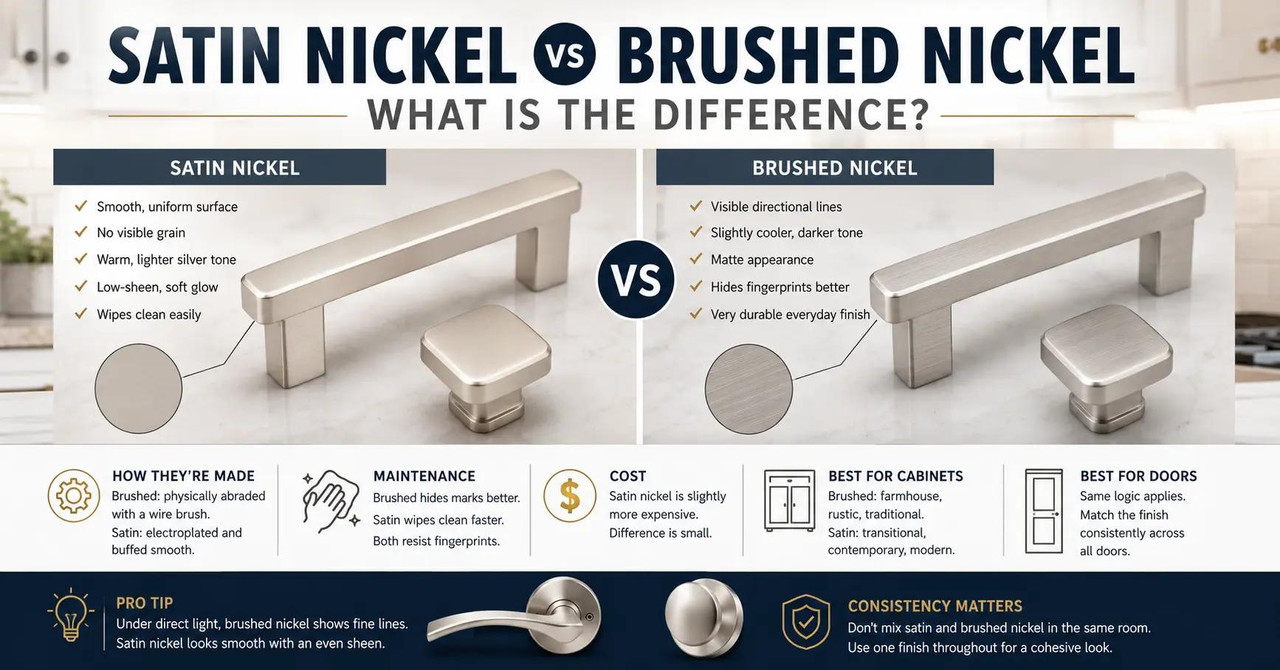
Brushed nickel has visible directional lines from physical abrasion. Satin nickel has a smoother uniform surface from electroplating and buffing with no visible grain. Many manufacturers use both terms interchangeably which is why the same hardware often appears under both names from different brands.
How Each Finish Is Made
Brushed nickel: metal surface is physically abraded with a fine wire brush in one direction leaving fine parallel lines that scatter light and create a matte appearance.
Satin nickel: base metal is electroplated with nickel then buffed or chemically treated to smooth the surface. Result is a low-sheen finish with a slightly warmer silver tone and no directional lines.
Both start with a nickel-plated zinc die-cast or brass base. The difference is entirely in the surface treatment after plating.
Visual Difference
Brushed nickel has a slightly darker cooler gray tone. The brush lines diffuse light unevenly creating a softer muted look. Satin nickel has a warmer lighter silver tone with a subtle low-luster glow. The smooth surface reflects light more evenly.
Under most kitchen lighting the two look extremely similar. The difference becomes visible under direct bright light where brushed nickel shows its texture and satin nickel shows its smooth sheen.
Maintenance
Brushed nickel hides fingerprints, water spots, and minor scratches better. The directional lines break up reflections and disguise marks. Satin nickel wipes clean more easily because the smooth surface releases grease faster.
But smudges are slightly more visible between cleanings. Both are significantly easier to maintain than polished chrome or polished nickel.
Are They the Same Finish
In many cases yes. Multiple major hardware brands label the same product as both satin and brushed nickel depending on the product line.
The practical problem: satin nickel tone varies between manufacturers. If replacing existing hardware, order a physical sample before buying a full set. Cosmas satin nickel bar pulls and satin nickel knobs coordinate within the same collection eliminating the cross-brand tone mismatch.
Cost Difference
Satin nickel runs slightly more expensive. The additional surface treatment adds minor production cost. The price difference at residential hardware level is small and should not be the primary deciding factor.
Which Works Better for Cabinet Hardware
Both perform well on cabinet pulls and cabinet knobs. Brushed nickel suits farmhouse, rustic, and traditional kitchens. The cooler darker tone complements gray and greige cabinets well.
Satin nickel suits transitional, contemporary, and modern kitchens. The warmer lighter tone pairs well with white, cream, and wood-tone cabinets and coordinates naturally with stainless appliances.
Which Works Better for Door Hardware
For door levers and door knobs the logic is the same. Brushed nickel suits traditional and rustic homes. Satin nickel suits transitional and contemporary homes.
More importantly: match the finish consistently across all doors. Satin nickel on interior doors with brushed nickel on the front door creates a mismatch that reads as unplanned.
Can You Mix Satin and Brushed Nickel
Not within the same room. The finishes are too similar in tone to read as intentional contrast. Unlike mixing warm and cool metals which creates clear distinction, satin and brushed nickel mixed together reads as an error.
Across different rooms it works. Satin nickel in the kitchen and brushed nickel in bathrooms for example stays cohesive because the finishes are separated by space.
How to Tell Which You Have
Hold the hardware under direct light at an angle.
- Visible fine parallel lines running in one direction: brushed nickel.
- Smooth uniform surface with no directional grain: satin nickel.
Satin Nickel vs Brushed Nickel vs Polished Nickel
Polished nickel is a distinctly different finish. Buffed to a mirror-like shine with a warmer yellow-gold tone. Shows every fingerprint immediately. Suits traditional and glamorous interiors rather than everyday kitchen environments.
Satin Nickel vs Brushed Nickel vs Chrome
Polished chrome is brighter, cooler, and more reflective than both nickel finishes. Blue-silver tone compared to the warmer gray of nickel. Shows fingerprints heavily. Brushed chrome is the closest chrome equivalent to brushed nickel but still reads cooler and brighter.
Frequently Asked Questions
What is the difference between satin nickel and brushed nickel?
Brushed nickel has visible directional brush lines from physical abrasion. Satin nickel has a smooth uniform surface from electroplating and buffing. Many brands use both terms interchangeably.
Which is better for kitchen cabinet hardware?
Brushed nickel hides fingerprints better and suits farmhouse and traditional kitchens. Satin nickel wipes clean more easily and suits transitional and contemporary kitchens with stainless appliances.
Can you mix satin nickel and brushed nickel?
Not recommended within the same room. Too similar in tone to read as intentional design. Use one finish consistently throughout the space.
Does satin nickel match brushed nickel?
Not reliably. Similar but not identical. Under direct light brushed nickel shows texture that satin nickel does not. Order a sample before committing to a full order.
Is satin nickel more expensive than brushed nickel?
Slightly yes. Additional surface treatment adds minor production cost. Price difference at residential hardware level is usually small.
At Inside Out Hardware we carry cabinet pulls and cabinet knobs in satin nickel from Cosmas and door levers and door knobs from Designers Impressions. Free shipping on orders over $50 across the USA.
LATEST NEWS
How to Change a Door Knob: Complete Step by Step Guide
How to Change a Door Knob Changing a door knob is a 10-minute DIY project. You need a Phillips head...
Satin Nickel vs Brushed Nickel: What Is the Difference
Satin Nickel vs Brushed Nickel: What Is the Difference Brushed nickel has visible directional lines...
Best Hardware for White Cabinets: Finishes and Style Guide
Best Hardware for White Cabinets Matte black gives the boldest contrast on white cabinets. Brushed b...
Black Kitchen Hardware: Matte Black Pulls and Knobs Guide
Black Kitchen Hardware Matte black is the most popular kitchen hardware finish in the US market. It...

How to Choose the Right Door Hardware for Your Home
Door hardware comes down to four decisions: function, style, finish, and measurements. Get function...
How to Clean and Maintain Cabinet Hardware: Complete Care Guide
The right cleaning method depends on the finish. Using the wrong product causes permanent damage no...