
How to Change a Door Knob: Complete Step by Step Guide
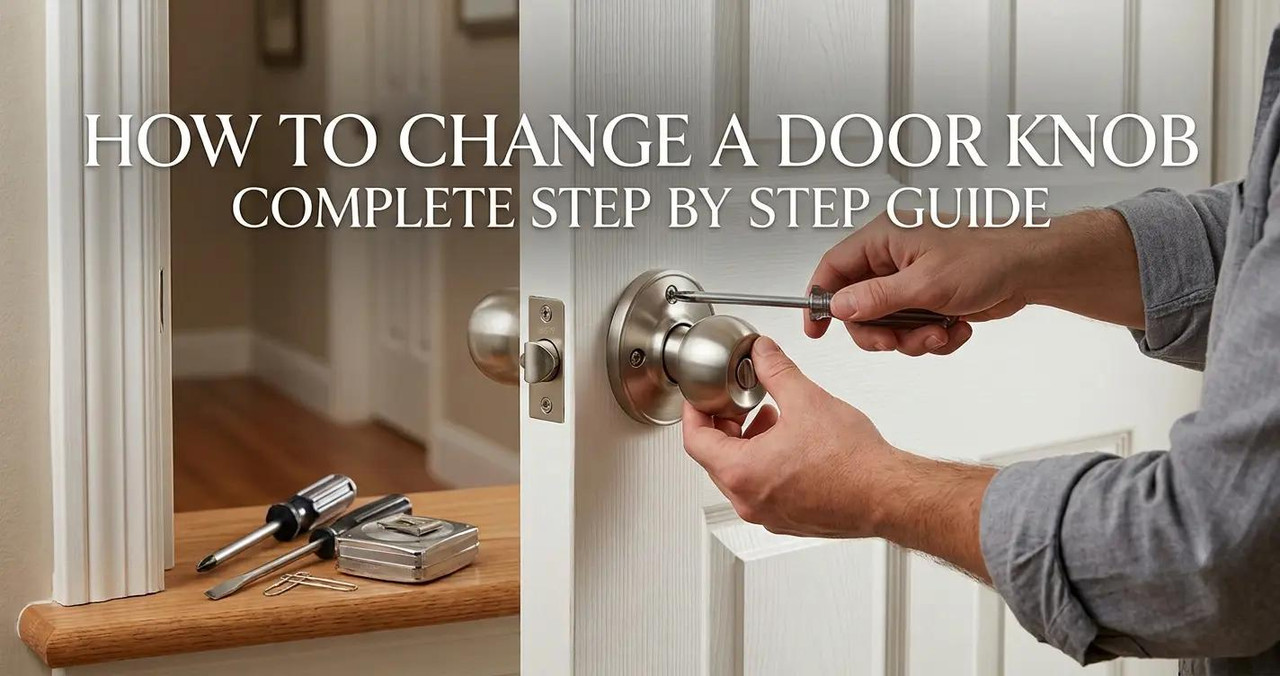
How to Change a Door Knob
Changing a door knob is a 10-minute DIY project. You need a Phillips head screwdriver, a flat head screwdriver, and a paperclip for knobs with hidden screws. No professional required.
Tools You Need
- Phillips head screwdriver
- Flat head screwdriver
- Straightened paperclip or small pin
- Tape measure (for backset measurement on replacement)
Before You Start: Check Your Backset
Measure from the door edge to the center of the existing knob hole. Standard sizes are 2-3/8 inch for most interior doors and 2-3/4 inch for exterior doors. Confirm this before buying a replacement so the new latch fits without re-drilling.
Also confirm the door function you need. Passage for hallways, privacy for bathrooms and bedrooms, keyed entry for exterior doors. The new knob must match the function of the old one or the door will not work correctly.
How to Change a Door Knob with Visible Screws
This is the most common type. Two screws are visible on the interior rosette plate.
- Step 1: Open the door so both sides are accessible. Locate the two screws on the interior side of the knob. Remove them with a Phillips head screwdriver turning counterclockwise.
- Step 2: Pull both halves of the knob apart and remove them from the door.
- Step 3: Remove the latch. Look at the door edge for two small screws holding the latch faceplate in place. Remove them and slide the latch out of the door.
- Step 4: Remove the strike plate from the door frame. Two screws hold it in place. Unscrew and remove.
- Step 5: Check the new latch bevel direction. The angled side of the latch must face the direction the door closes into the frame. If the bevel faces the wrong way the latch will not retract when the door closes. Most modern latches are reversible, flip the latch body to change bevel direction if needed.
- Step 6: Insert the new latch into the door edge with the bevel facing correctly. Secure with the provided screws.
- Step 7: Insert the exterior knob half through the door from the outside. The spindle must pass through the center of the latch mechanism.
- Step 8: Align the interior knob half and push the two halves together. The spindle from the exterior side must seat properly through the interior mechanism.
- Step 9: Insert the mounting screws from the interior side. Hand-tighten first to confirm alignment then tighten with a screwdriver. Do not over-tighten. Over-tightening binds the knob and makes it stiff to turn.
- Step 10: Install the new strike plate on the door frame. Align it with the latch hole and secure with screws.
- Step 11: Test the knob. Turn from both sides and confirm the latch retracts fully. Close the door and confirm it latches cleanly without force.
How to Change a Door Knob Without Screws
Modern knobs often have no visible screws. The screws are hidden behind the rosette plate. The removal process is slightly different.
- Step 1: Look for a small pinhole or slot on the neck of the interior knob between the knob and the rosette plate.
- Step 2: If there is a pinhole, straighten a paperclip and insert it into the hole until you feel the spring-loaded retaining pin. Press inward while pulling the knob away from the door. The knob will slide off.
- Step 3: If there is a slot, insert a flat head screwdriver into the slot and press inward while pulling the knob. It will release and slide off.
- Step 4: With the knob removed, look at the rosette plate. It either pries off or twists off counterclockwise. Insert a flathead screwdriver into the small notch along the edge and pry gently, or grip the plate and turn counterclockwise until it releases.
- Step 5: The mounting screws are now visible behind the rosette plate. Remove them with a Phillips head screwdriver.
- Step 6: Pull the exterior knob off from the other side of the door.
- Step 7: Remove the latch from the door edge and the strike plate from the door frame following the same steps as the visible screw method above.
- Step 8: Install the new knob following the standard installation steps. The new knob will either have visible screws or the same hidden pin mechanism depending on the replacement model.
How to Change a Bathroom Door Knob
Bathroom door knobs use privacy function, a push button lock on the interior with a small emergency release hole on the exterior rosette.
The removal and installation process is identical to the standard visible screw method. The only difference is confirming the new knob is also privacy function before purchasing. A passage knob in a bathroom provides no privacy. A keyed entry knob in a bathroom is the wrong function. Privacy function only.
If the existing bathroom door has a privacy knob with a push button that no longer locks or releases properly, the mechanism has failed and the full knob set needs replacement rather than repair.
How to Change a Door Knob and Lock
For exterior doors with a keyed entry knob, the process is the same as standard replacement with one additional consideration: backset measurement matters more on exterior doors.
Most exterior doors use a 2-3/4 inch backset. Confirm the existing backset before ordering a replacement keyed entry knob. If the new knob has a different backset the latch will not align with the strike plate on the door frame.
After installing a new keyed entry knob on an exterior door, test it with a key from outside before closing the door to confirm the cylinder operates the latch correctly.
For a full exterior door security upgrade, pair the keyed entry knob with a separate single cylinder deadbolt. The knob handles the latch and the deadbolt provides the primary security.
How to Change a Door Knob with Hidden Screws: Identifying the Type
If you cannot find visible screws and cannot locate a pinhole or slot on the knob neck, the screws may be hidden under a decorative cap on the rosette.
Look for a thin seam around the edge of the rosette plate. Insert a flat head screwdriver into the seam and gently pry the decorative cover off. The mounting screws are underneath.
Some older knobs use a set screw on the side of the knob shank instead of a pinhole. Look for a small hole on the side of the knob near the base. Insert an Allen wrench to loosen the set screw, then slide the knob off the shank.
Common Problems and Fixes
Latch does not retract when knob is turned: spindle is not seated through the latch mechanism properly. Remove the knob halves and realign the spindle through the latch before reinstalling.
Door does not latch closed: strike plate is misaligned with the latch. Loosen the strike plate screws, adjust the plate position, and re-tighten. If the latch hits the edge of the strike plate opening instead of entering it, the door has settled and the strike plate needs to be moved slightly.
Knob feels stiff after installation: mounting screws are over-tightened. Loosen both screws slightly until the knob turns freely, then retighten just until snug.
Latch bevel faces wrong direction: remove the latch, flip the latch body to reverse the bevel direction, and reinstall.
Frequently Asked Questions
How long does it take to change a door knob?
Most door knob replacements take 10 to 15 minutes with a Phillips head screwdriver. Knobs with hidden screws or misaligned strike plates may take up to 30 minutes.
How hard is it to change a door knob?
Very straightforward. No special skills required. If you can use a screwdriver you can replace a door knob. The most common issue is identifying the backset measurement before buying a replacement.
How much does it cost to change a door knob?
The hardware itself costs $15 to $50 for residential passage and privacy knobs and $30 to $80 for keyed entry sets. No labor cost if you do it yourself.
How do I change a door knob without visible screws?
Look for a small pinhole or slot on the knob neck between the knob and the rosette plate. Push a straightened paperclip into the pinhole while pulling the knob to release it. The rosette plate then twists off or pries off to reveal the hidden screws.
Can I replace a door knob with a lever?
Yes. Most door preparations accept both knobs and levers as long as the backset and bore hole measurements match. Check that the new door lever uses the same backset as the existing knob before purchasing.
Do I need to replace the strike plate when changing a door knob?
Replace the strike plate if the new latch is a different size or if the existing strike plate is worn or damaged. If the new latch matches the old latch dimensions exactly the existing strike plate can remain.
At Inside Out Hardware we carry door knobs and door levers from Designers Impressions in passage, privacy, and keyed entry functions in satin nickel, matte black, oil rubbed bronze, and polished chrome. Free shipping on orders over $50 across the USA.
LATEST NEWS
How to Change a Door Knob: Complete Step by Step Guide
How to Change a Door Knob Changing a door knob is a 10-minute DIY project. You need a Phillips head...
Satin Nickel vs Brushed Nickel: What Is the Difference
Satin Nickel vs Brushed Nickel: What Is the Difference Brushed nickel has visible directional lines...
Best Hardware for White Cabinets: Finishes and Style Guide
Best Hardware for White Cabinets Matte black gives the boldest contrast on white cabinets. Brushed b...

Black Kitchen Hardware: Matte Black Pulls and Knobs Guide
Black Kitchen Hardware Matte black is the most popular kitchen hardware finish in the US market. It...

How to Choose the Right Door Hardware for Your Home
Door hardware comes down to four decisions: function, style, finish, and measurements. Get function...
How to Clean and Maintain Cabinet Hardware: Complete Care Guide
The right cleaning method depends on the finish. Using the wrong product causes permanent damage no...