
Door Knobs vs Levers: Which Is Right for You
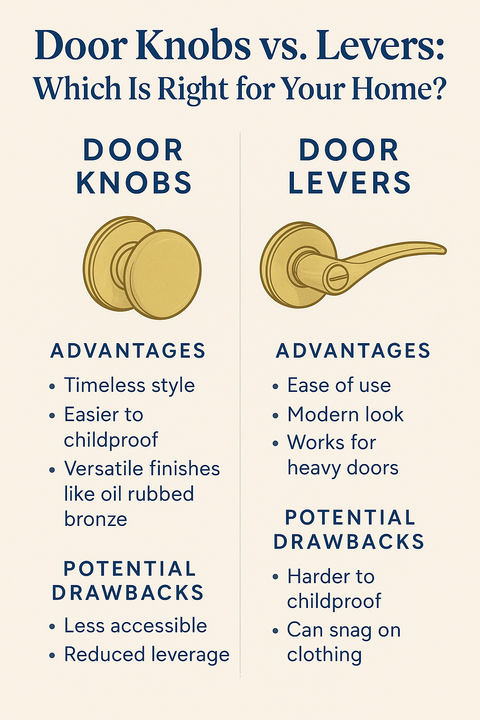
Levers win on ease of use and accessibility. Knobs win on childproofing and pet security. The right choice depends on who uses the door and what the room requires. Here is every factor that matters.
How Each One Works
Knobs require gripping and twisting to retract the latch. The motion needs hand strength and wrist rotation. Levers retract the latch with a simple downward push. No grip, no twist, no full hand required.
Style by Home Type
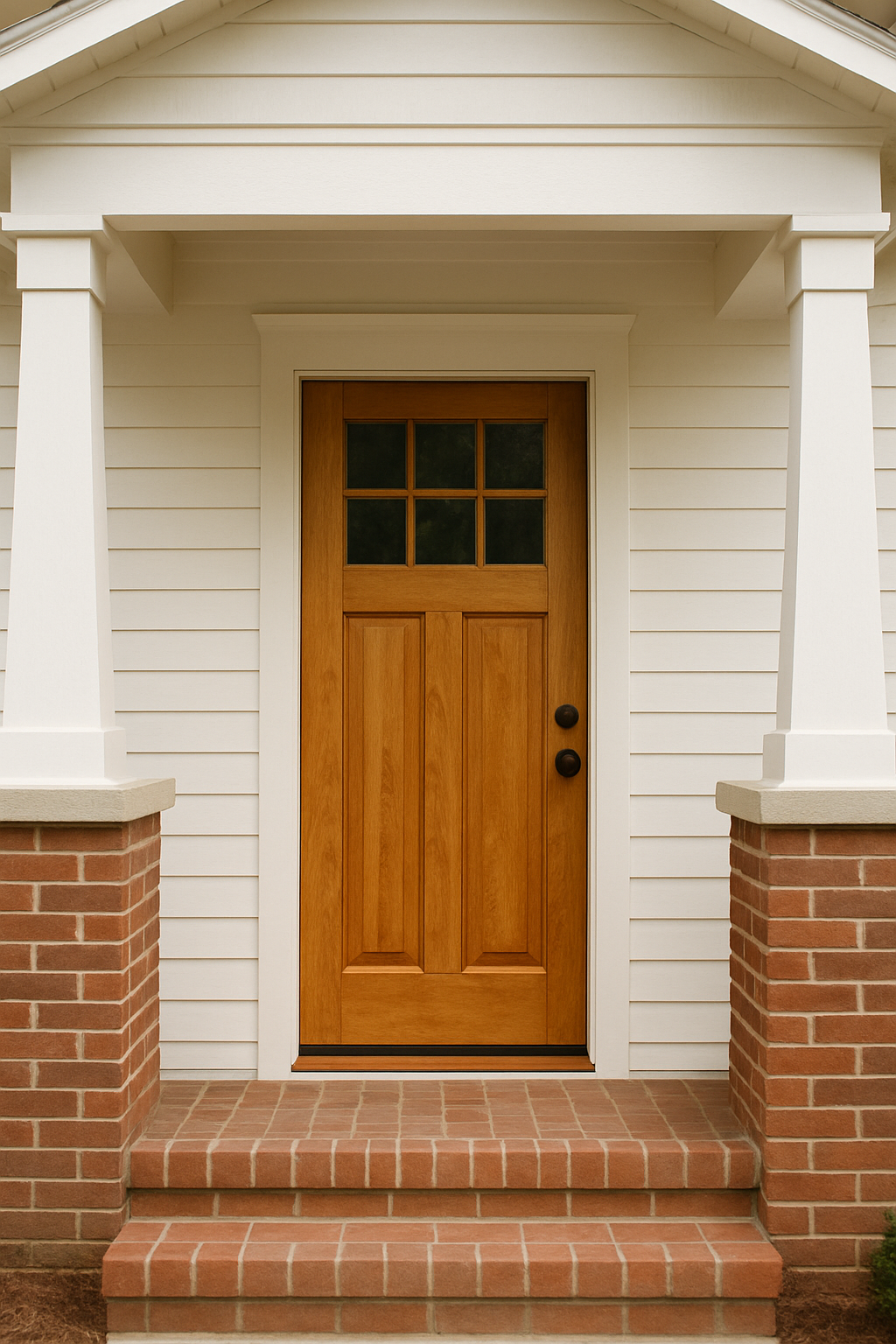
Knobs suit traditional, colonial, craftsman, Victorian, and farmhouse homes. Their rounded profile fits raised panel doors, ornate rosettes, and wood-heavy interiors naturally.
Levers suit modern, contemporary, transitional, and European-style homes. Straight profiles and clean rosettes complement flat panel doors and minimalist interiors. Both come in every major finish so style alone should not be the deciding factor.
Ease of Use
Levers are easier for almost everyone. A lever opens with one hand, a closed fist, or an elbow when carrying groceries or laundry. Knobs require a firm grip and wrist rotation. Wet hands, lotion, or cold weather makes this noticeably harder.
ADA Compliance
ADA Standards for Accessible Design require lever handles on all public-facing doors in commercial buildings. The standard states door hardware must be operable with one hand without tight grasping, pinching, or twisting of the wrist, installed between 34 and 48 inches above the floor.
Private residences are not legally required to meet ADA standards. Following these guidelines is recommended for any home designed for aging in place, resale, or accommodating anyone with arthritis or limited grip strength.
Childproofing
Knobs win here. The twisting motion is genuinely difficult for toddlers. Snap-on childproof covers work easily on round knobs and remove without tools.
Levers are much easier for children to open. A toddler can hang their full body weight on a lever and the door opens. Lever childproof locks require screws into the door slab, making them more permanent and less convenient.
Pets
Cats and dogs regularly learn to operate lever handles. A cat hooks a paw under a lever and pulls down. A large dog jumps against the door and pushes the lever open. If you have a determined pet and an exterior door, knobs are the safer choice on that specific door.
Aging in Place
Levers win clearly. Arthritis and reduced grip strength make knobs progressively harder to use over time. A lever requires no rotation and can be operated with the back of the hand or wrist when pain limits normal use. If you plan to stay in the home long term, installing levers now costs the same as knobs and eliminates a problem that gets worse over time.
Security
Neither knobs nor levers provide meaningful security on their own. Security comes from the deadbolt, strike plate, door frame reinforcement, and installation quality. Both are equally secure when paired with a properly installed deadbolt on any exterior door.
Cost
Knobs are less expensive at every quality tier. Entry level knobs run $15 to $25 per unit. Entry level levers run $25 to $50. For a full home with 15 to 20 interior doors the difference adds up.
The Snag Factor
Levers project horizontally from the door face. In tight hallways, narrow bathrooms, and small bedrooms a lever catches on clothing, belt loops, and bags. Knobs eliminate this problem entirely on doors that open into tight spaces.
Can You Mix Knobs and Levers in One Home
Yes. Choose hardware type by what each door requires. Levers on high traffic interior doors. Knobs where childproofing or pet control matters. Keep the finish consistent across both types for a unified look.
Door by Door Decision Guide
Front door: keyed entry lever or knob with deadbolt. Lever if aging in place matters. Knob if pets or traditional exterior is the priority.
Back or side entry door: same as front door. Knob if pets accessing exterior is a concern.
Bathroom: privacy function. Lever for ease of use. Knob if toddlers need to be kept out.
Bedroom: privacy function. Lever for most households. Knob if childproofing that room matters.
Hallways and pass-through interior doors: passage lever for daily convenience.
Closets where children must be kept out: passage knob or knob with childproof cover.
Closets with no restriction needed: passage lever or dummy set.
Home office: keyed entry if access control matters. Either knob or lever by style preference.
Laundry room: passage lever. Hands are usually full going in and out.
Basement or utility door: passage lever for ease. Knob if pets or children accessing the space is a concern.
Finish Guide
Both door knobs and door levers are available in the same finishes. Choose based on what is already in the room.
Matte black: modern, contemporary, farmhouse, high contrast against white doors Satin nickel: versatile across all home styles, coordinates with stainless appliances Oil rubbed bronze: traditional, craftsman, rustic, farmhouse Brushed brass: transitional and traditional, warm tone, coordinates with wood floors Polished chrome: contemporary, bright bathrooms, coastal interiors
Match door hardware finish to the faucet, light fixtures, and cabinet hardware already in the space.
Frequently Asked Questions
Are levers or knobs better for interior doors?
Levers for most interior doors. Easier to use daily and the practical choice for aging in place. Knobs are better where childproofing or pet control is needed on specific doors.
Can pets open door levers?
Yes. Cats and large dogs regularly learn to operate lever handles. If pets accessing exterior doors is a concern, knobs are the practical solution on those specific doors.
Are door levers ADA compliant?
Levers meet ADA Standards which require hardware operable without tight gripping, pinching, or wrist twisting. Knobs do not meet this standard. Required in commercial buildings and recommended for residential aging in place design.
Can you mix knobs and levers in the same home?
Yes. Choose the hardware type by what each door requires and keep the finish consistent across both.
Which is better for childproofing?
Knobs. The twisting motion is harder for toddlers and snap-on childproof covers work easily without permanent modification.
Are door levers more expensive than knobs?
Yes. Entry level knobs run $15 to $25 per unit. Entry level levers run $25 to $50. For a full home installation the cost difference is meaningful.
At Inside Out Hardware we carry door knobs and door levers from Designers Impressions in matte black, satin nickel, oil rubbed bronze, and polished chrome. Free shipping on orders over $50 across the USA.
LATEST NEWS
How to Change a Door Knob: Complete Step by Step Guide
How to Change a Door Knob Changing a door knob is a 10-minute DIY project. You need a Phillips head...
Satin Nickel vs Brushed Nickel: What Is the Difference
Satin Nickel vs Brushed Nickel: What Is the Difference Brushed nickel has visible directional lines...
Best Hardware for White Cabinets: Finishes and Style Guide
Best Hardware for White Cabinets Matte black gives the boldest contrast on white cabinets. Brushed b...

Black Kitchen Hardware: Matte Black Pulls and Knobs Guide
Black Kitchen Hardware Matte black is the most popular kitchen hardware finish in the US market. It...

How to Choose the Right Door Hardware for Your Home
Door hardware comes down to four decisions: function, style, finish, and measurements. Get function...
How to Clean and Maintain Cabinet Hardware: Complete Care Guide
The right cleaning method depends on the finish. Using the wrong product causes permanent damage no...