
How to Choose Cabinet Hardware for Any Kitchen
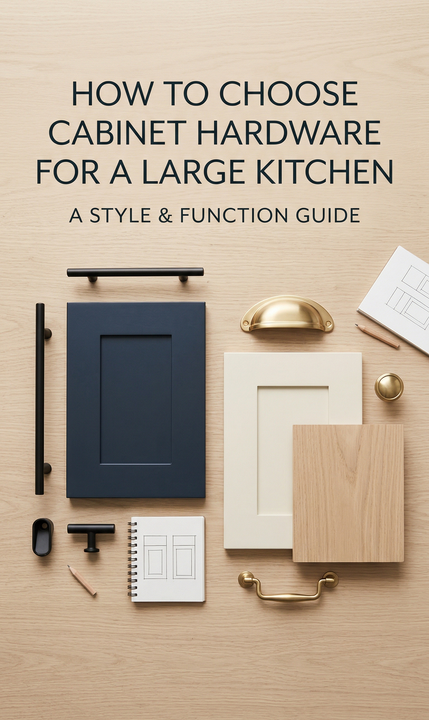
Choosing cabinet hardware comes down to three decisions: which type fits the function, which finish connects to your existing room metals, and which size is proportional to the cabinet face. Here is how to work through each one.
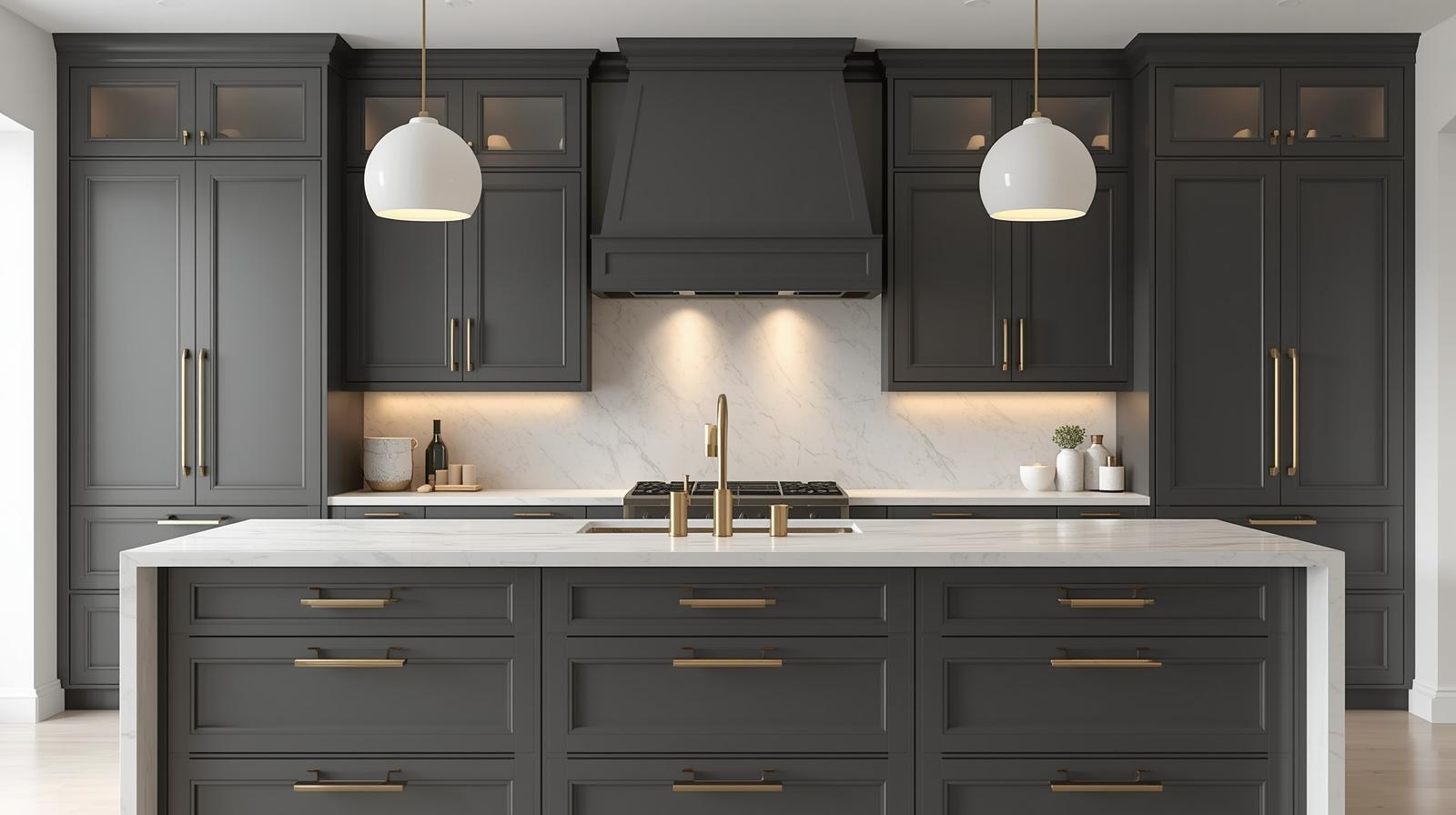
Step 1: Choose the Right Hardware Type
Knobs work on hinged cabinet doors that need minimal force to open. Pulls work on drawers, base cabinet doors, and any surface opened under load. Use the type that matches the effort required to open the surface.
Cup pulls and bin pulls suit traditional, farmhouse, and shaker kitchens on lower drawers. Appliance pulls are heavier duty with larger bolts, designed specifically for panel-ready refrigerators and dishwashers. Do not substitute a standard pull on an appliance panel. Edge pulls sit flush to the door face and suit slab fronts where the finish is the visual focus.
Step 2: Get the Sizing Right
For pulls, use the 1/3 Rule: pull length equals one-third of the drawer width.
Under 12 inches: 3 to 4 inch pull, 76mm or 96mm 15 to 18 inches: 5 to 6 inch pull, 128mm 21 to 24 inches: 7 to 8 inch pull, 160mm or 192mm 30 inches or wider: two pulls in thirds or one 10 to 12 inch, two 128mm or one 256mm Pantry or full height door: 8 to 12 inch appliance pull
Cabinet doors do not follow the 1/3 rule. A 4 to 6 inch pull at the corner suits most standard doors. Pantry doors 84 inches or taller need an 8 to 12 inch pull.
For knobs: 1 to 1-1/4 inch diameter on standard upper cabinets, 1-3/8 to 1-1/2 inch on larger base cabinet doors. Double stacked cabinetry needs smaller hardware on the top row.
Step 3: Choose the Right Finish
Match hardware finish to the metals already in the room. Start with the faucet. Warm metals including brass, bronze, and gold suit warm cabinet tones and wood-heavy kitchens. Cool metals including satin nickel, polished chrome, and gunmetal suit gray, white, and blue-toned cabinets.
Finish by cabinet color:
White or cream: matte black, satin nickel, brushed brass Light gray: satin nickel, polished chrome, brushed nickel Navy or deep blue: brushed brass, satin brass, polished nickel Forest green or sage: brushed brass, unlacquered brass, oil rubbed bronze Light oak or maple: matte black, oil rubbed bronze, satin nickel Dark walnut or espresso: brushed brass, satin nickel, polished nickel Two-tone kitchen: one finish throughout both zones
Two finishes maximum. One dominant at 80 percent, one accent at 20 percent. The accent must appear elsewhere in the room. If it only appears on the hardware it reads as a mistake.
Step 4: Check Function and Maintenance
Check projection before buying. Any pull with less than 1 inch projection does not leave enough clearance for a comfortable daily grip. Standard bar pulls and cup pulls project 1-1/4 to 1-3/4 inches.
Finish maintenance by type:
Matte black: lowest maintenance, resists fingerprints, wipes clean easily Satin nickel: mid-level, some water spots in hard water areas, easy to clean Polished chrome: highest maintenance, shows every fingerprint, better for bathrooms Oil rubbed bronze: living finish, develops patina with use, simple profiles easier to clean Brushed brass: mid-level, resists fingerprints better than polished brass
Ornate hardware with deep grooves collects grease faster. For high-use kitchens, clean-lined profiles in any finish are easier to maintain.
Step 5: Measure for Replacement Installs
Measure center-to-center on your existing pull before ordering. Common sizes are 76mm, 96mm, 128mm, 160mm, and 192mm. If the new pull has a different center, two options: use a backplate to cover old holes, or fill and re-drill.
For new cabinetry with no pre-drilled holes, specify 96mm or 128mm. These are the most universally available sizes across all hardware brands.
How Many Pieces to Order
Count every door, drawer, pantry door, and appliance panel separately. Each door needs one knob or pull. Each drawer needs one pull unless 30 inches or wider, in which case two. Add 5 to 10 percent extra for installation mistakes and future replacements.
Hardware by Cabinet Style
Shaker: round or square knobs on doors, bar pulls or cup pulls on drawers. Keep profiles clean and simple. Flat panel or slab: pulls only. Bar pulls, tab pulls, and edge pulls suit the unframed surface. Raised panel or traditional: cup pulls, bin pulls, and decorative knobs. Bar pulls look out of place here. Inset: smaller knobs and shorter pulls. Oversized bar pulls look heavy against flush construction.
Common Mistakes
Ordering before measuring existing hole centers. Wrong center-to-center means the hardware will not fit without re-drilling.
Choosing finish before checking the room. Identify faucet, pendant lights, and range hood trim first.
Buying from multiple brands in the same finish. Satin nickel varies between manufacturers. Cosmas and Designers Impressions both offer collections where knobs and pulls coordinate in finish and proportion within the same line.
Skipping samples. Order one knob and one pull, test against real cabinets under real lighting before a full order.
Exact Placement Numbers
Knobs on upper doors: 1 to 2 inches from corner opposite hinge Knobs on lower doors: top corner opposite hinge, 2 to 3 inches from edge Knobs on small drawers under 12 inches: centered horizontally and vertically Pulls on drawers: centered horizontally, centered vertically. Shallow drawers under 4 inches: slightly above center Pulls on cabinet doors: vertical, top corner opposite hinge, 2 to 4 inches from edge Appliance pulls on dishwashers: 2 to 3 inches from top of panel Appliance pulls on refrigerators: 44 to 52 inches from floor
Use a drilling jig for full kitchen installs.
Frequently Asked Questions
How do I choose cabinet hardware for my kitchen?
Knobs for doors, pulls for drawers. Match finish to the faucet. Size pulls using the 1/3 Rule.
What is the most popular finish right now?
Matte black and satin nickel lead the US market. Brushed brass is growing in transitional and farmhouse kitchens.
Should all hardware be the same finish?
Yes for most kitchens. A second finish works only when one dominates and the second appears in the room's faucet or lighting.
How do I measure for replacement hardware?
Measure center-to-center on existing pull. Common sizes are 96mm and 128mm.
What hardware works best on shaker cabinets?
Round or square knobs on doors, straight bar pulls on drawers in satin nickel, matte black, or brushed brass.
What is a backplate and when should I use one?
A decorative plate behind a knob or pull. Use it to cover old holes when replacing hardware with a different hole center.
At Inside Out Hardware we carry cabinet knobs, cabinet pulls, and cabinet hinges from Cosmas and Designers Impressions in satin nickel, matte black, oil rubbed bronze, polished chrome, and brushed brass. Free shipping on orders over $50 across the USA.
LATEST NEWS
How to Change a Door Knob: Complete Step by Step Guide
How to Change a Door Knob Changing a door knob is a 10-minute DIY project. You need a Phillips head...
Satin Nickel vs Brushed Nickel: What Is the Difference
Satin Nickel vs Brushed Nickel: What Is the Difference Brushed nickel has visible directional lines...
Best Hardware for White Cabinets: Finishes and Style Guide
Best Hardware for White Cabinets Matte black gives the boldest contrast on white cabinets. Brushed b...
Black Kitchen Hardware: Matte Black Pulls and Knobs Guide
Black Kitchen Hardware Matte black is the most popular kitchen hardware finish in the US market. It...

How to Choose the Right Door Hardware for Your Home
Door hardware comes down to four decisions: function, style, finish, and measurements. Get function...
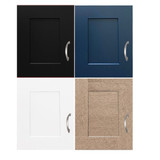
How to Clean and Maintain Cabinet Hardware: Complete Care Guide
The right cleaning method depends on the finish. Using the wrong product causes permanent damage no...